


Minton, John – Derelict Machinery
Price range: £98.00 through £210.00
Description
Pen and ink and watercolour on paper – a finely observed scene of machinery which, although still used at the time of painting, was soon to be replaced by something mechanized. And herein lies its attraction and enjoyment – the component parts of this Smyth Multi-row Corn and Seed Drill are comprehensible, the wheels those of an archetypal wagon.

About This Artist
John Minton
Painter and illustrator, Francis John Minton was born at Great Shelford, Cambridgeshire and educated at Northcliff House, Bognor Regis, Sussex, and Reading School, Berkshire. He attended St. John’s Wood Art School in London where he met Michael Ayrton (1921-1975) and with whom he travelled to Paris where he spent eight months absorbing and learning from the Parisian Neo-Romantics Eugène Berman, Pavel Tschelitchew and Giorgia de Chirico. On his return to England he painted street scenes of war-torn London (wherein Berman’s influence can clearly be discerned) and with Ayrton held an exhibition at the Leicester Galleries.
Minton shared a studio with Scottish painters Robert Colquhoun and Robert MacBryde, and thereafter for some years with Keith Vaughan (see Artists). From each of these painters an influence and similarity can be discerned – from the Scottish painters he learned to be a colourist, and like Vaughan he explored aspects of the English Neo-Romantic concern for pastoral intimacy.
Minton taught at Camberwell College of Arts; at the Central School and at the Royal College of Art (from 1948-56). He was the illustrator for the first Elizabeth David cookbooks – ‘A Book of Mediterranean Food’ (1950) and ‘French Country Cooking’ (1951), and for Alan Ross’s book on Corsica ‘Time was Away’ (1948). He travelled in Spain, the West Indies and Morocco, and held five one-man shows at the Lefevre Gallery. Of Minton’s work in these exhibitions The Times would write: ‘Even when they were ostensibly of Spain and Jamaica, Minton’s landscapes looked back to Samuel Palmer for their mood. They were densely patterned and luxuriantly coloured, and it was always the fullness and richness of the scene which attracted his eye and which he painted with such evident enjoyment’ (1944).
Minton was respected both by the conservative Royal Academy and by the modernist London Group; and indeed Minton was a member of the London Group, regularly exhibiting with them.
But he was not sympathetic to the emerging fascination with abstract painting, and he began to feel himself out of touch. His latter days were not happy. Although openly acknowledging of his homosexuality, he was conflicted by this, and increasingly he suffered with mood swings, experiencing periods of frenetic activity followed by dark depressions. He became dependent on alcohol and finally, taking an overdose of drugs, he died in London, January 1957.
Related products
-

Bawden, Edward – A Frog and an Ox
Price range: £148.00 through £260.00 -

Andrews, Sybil – Winch
Price range: £138.00 through £250.00 -

Bawden, Edward – Hare and Tortoise
Price range: £148.00 through £260.00 -

Bawden, Edward – Cattle Market Braintree
Price range: £148.00 through £260.00 -

Bawden, Edward – Brighton Pier
Price range: £135.00 through £247.00 -

Ardizzone, Edward – Tim and Lucy
Price range: £49.00 through £131.00 -

Bawden, Edward – Autumn
Price range: £148.00 through £260.00 -

Ardizzone, Edward – Tim’s Friend Towser
Price range: £49.00 through £131.00 -

Andrews, Sybil – Mangolds
Price range: £138.00 through £250.00 -

Bawden, Edward – Palace of Westminster
Price range: £148.00 through £260.00
FRAMING
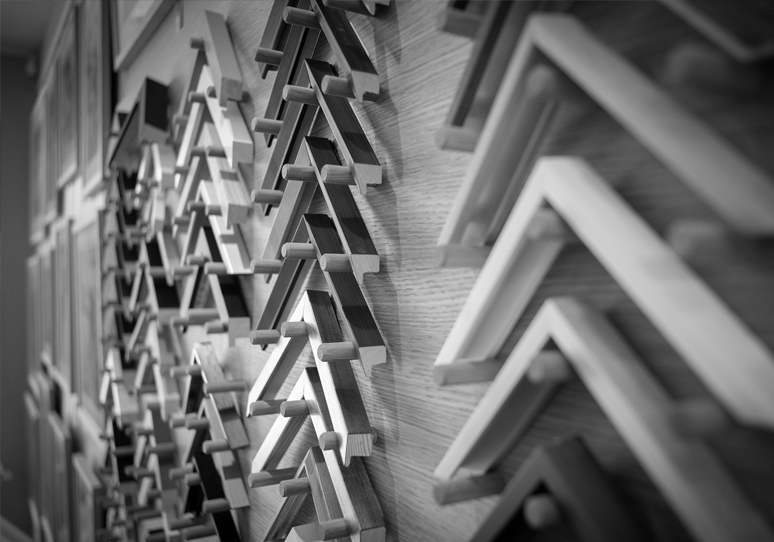
We bespoke frame all prints; this ensures that your print will be presented at its best. Each frame is hand-assembled with joints precisely aligned. The mount is an archival pH neutral museum grade white core mount which does not fade with time. We use 2mm UV filtering glazing and there is a choice of wood and aluminium frames.

