


Caulfield, Patrick – Still Life Ingredients
Price range: £195.00 through £333.00
Description
Screenprint on paper (1976). Vibrancy of colours; comparative intricacy of shapes but these are still pared down in typical Caulfield fashion. We look through a window to organic shapes of leaves and branches beyond, culinary ingredients in the foreground. In many ways this is a typical Caulfield in that his subject matter is traditional, yet the manner in which he portrays this attractive scene is new and bright and winsome.

About This Artist
Patrick Caulfield
“I was aiming at reducing the means by which one described things”. Patrick Caulfield’s paintings and prints are characterized by this descriptive reductionism: a few simple lines are enough, a handful of objects in an interior, their contours outlined in black, their interiors filled-in with flat monochrome.
Born in London (1936) Caulfield studied first at Chelsea Art School (1956-1959) and then at the Royal College of Art (1960-1963) where his fellow students included David Hockney and Peter Blake. He participated in the New Generation Exhibition at the Whitechapel Gallery (1964) which showcased work by John Hoyland, David Hockney and Bridget Riley – all associated in their way with the beginnings of pop art in the 1950’s – and Caulfield’s name became linked, therefore, with pop art. But Caulfield resisted the link. Whilst his paintings of the 1960’s shared pop art’s interest in the everyday, he was less interested in mass consumerism and advertising which characterizes pop art – particularly as it was developed by Andy Warhol and Roy Lichtenstein in 1960’s America – and more in conventional everyday details. His paintings are full of pots and vases, lamps and chairs – he painted still lives and interiors. But he painted these in new and modern ways. Instead of comparing him to luminaries in the pop art movement.
Caulfield should be compared to earlier artists such as Juan Gris (1887-1927) and Fernand Léger (1881-1955) – both forerunners of the Pop Art Movement. Caulfield taught at Chelsea School of Art from 1963-1971. He was nominated for the Turner Prize for his show The Artist’s Eye at the National Gallery 1986, and awarded a CBE in 1996. Caulfield died in London in 2005.
Related products
-

Flight, Claude – Speed
Price range: £138.00 through £250.00 -

Bawden, Edward – Liverpool Street Station
Price range: £135.00 through £247.00 -

Ardizzone, Edward – Little Tim and the Brave Sea Captain
Price range: £56.00 through £138.00 -

Ardizzone, Edward – Tim and Lucy
Price range: £49.00 through £131.00 -

Bawden, Edward – Brighton Pier
Price range: £135.00 through £247.00 -

Bawden, Edward – Autumn
Price range: £148.00 through £260.00 -

Bawden, Edward – Palace of Westminster
Price range: £148.00 through £260.00 -

Ardizzone, Edward – Flotsam and Jetsam (orig. untitled)
Price range: £78.00 through £160.00 -

Andrews, Sybil – Football
Price range: £138.00 through £250.00 -

Ardizzone, Edward – Bunk-bed at Sea
Price range: £49.00 through £131.00
FRAMING
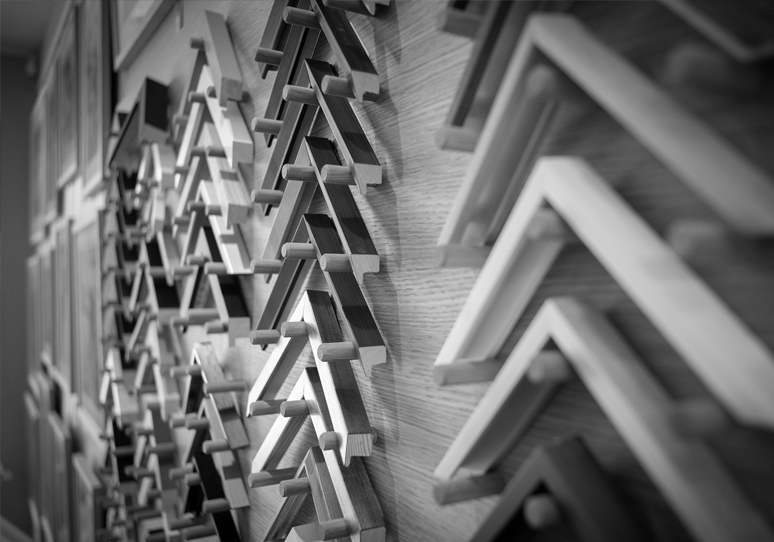
We bespoke frame all prints; this ensures that your print will be presented at its best. Each frame is hand-assembled with joints precisely aligned. The mount is an archival pH neutral museum grade white core mount which does not fade with time. We use 2mm UV filtering glazing and there is a choice of wood and aluminium frames.

