


Ravilious, Eric – Newhaven Harbour
Price range: £215.00 through £363.00
Our Ravilious prints are authorized for publication by the Estate, and each print has a seal of authenticity embossed onto the white paper margin.
Description
Ravilious produced Newhaven Harbour in 1937 for Contemporary Lithographs Ltd, a venture which enlisted many of the most talented artists of the 1920’s and ‘30’s (see Artists: Piper; Bawden; Ardizzone; John and Paul Nash). They produced auto-lithographs – lithographs on which the artists themselves worked (rather than simply the printer). These works were disseminated widely, often to schools. The idea was to bring artistic excellence to those who neither owned, nor had easy access to art through public galleries.
Ravilious called Newhaven Habour his ‘homage to Seurat’. Seurat (1859-91) developed the pointillist technique. He applied tiny dots of pure pigment, finding that this produced luminosity and brightness of colour in his paintings. As homage the work is certainly effective. Newhaven Harbour is one of Ravilious’s best loved works.

About This Artist
Eric Ravilious
NB: Our Ravilious prints are the only Estate Authorized prints available in the UK.
Watercolourist, wood engraver, lithographer and mural decorator, Eric Ravilious was born in Acton but grew up in Eastbourne, Sussex, where he studied until receipt of a scholarship to the Royal College of Art. Student in the Design School of the College, Ravilious was taught by Paul Nash and became friends, and sometime work companion, with Edward Bawden. In 1930 he married the artist Tirzah Garwood and befriended Sussex based artist Peggy Angus. It is from her home, Furlongs, near Firle on the Sussex Downs just outside of Brighton, that Ravilious began to paint his Downland subjects.
Eric Ravilious went on to design for Wedgwood who, in 1937, brought out the George VI commemorative Coronation Mug, and in the same year the (much collected) Alphabet Mug and Nursery Ware designs. In 1938 Country Life published the book High Street, by J. M. Richards, for which Eric Ravilious supplied a series of lithographs documenting the charms of certain Victorian high street shops – some no longer extant such as the Saddlers and Harness Maker’s shop, or the Fireworks Shop.
Eric Ravilious was appointed Official War Artist in 1940. His watercolours during this period document the setting up of coastal defences at, amongst other places, Newhaven in Sussex; he also worked on a series of lithographs which record life as a submariner patrolling the Channel waters. In 1942, aged 39, Ravilious was posted to Iceland, and in September he participated in an air/sea rescue on board a Hudson plane in search of an aircraft that had disappeared on the previous day. The Hudson itself, however, was lost and Ravilious, along with four others, never returned from this mission.
Eric Ravilious is well known for his wood engravings and for his designs, but more recently it is his watercolours which have, perhaps, been of central interest. If artists are sometimes defined by their work on a particular area – Palmer by Shoreham, for instance – Ravilious, as Peyton Skipwith suggests, is the ‘artist par excellence of the South Downs’* Ravilious’s austerely beautiful watercolours are almost always devoid of people.
But it is this very lack which Ravilious explores: so often in his paintings there is a conspicuousness of absence. There is evidence, almost always, of the land having been traversed and used: the paths are well trodden, the fences zigzag their way across the terrain and pieces of machinery lie rusting in the fields. These man-made artefacts allow an association to the absent walker, farmer or machine operator, but the lack of actual presences can sometimes lend a certain sadness to the poignant beauty of the pictures.
Related products
-

Ardizzone, Edward – Flotsam and Jetsam (orig. untitled)
Price range: £78.00 through £160.00 -

Bawden, Edward – Liverpool Street Station
Price range: £135.00 through £247.00 -

Ardizzone, Edward – Bunk-bed at Sea
Price range: £49.00 through £131.00 -

Ardizzone, Edward – Little Tim and the Brave Sea Captain
Price range: £56.00 through £138.00 -

Bawden, Edward – Snowstorm at Brighton
Price range: £148.00 through £260.00 -

Bawden, Edward – Hare and Tortoise
Price range: £148.00 through £260.00 -

Ardizzone, Edward – Barmaids Old and New
Price range: £29.00 through £121.00 -

Andrews, Sybil – Speedway
Price range: £138.00 through £250.00 -

Andrews, Sybil – Winch
Price range: £138.00 through £250.00 -

Bawden, Edward – Covent Garden Flower Market
Price range: £148.00 through £260.00
FRAMING
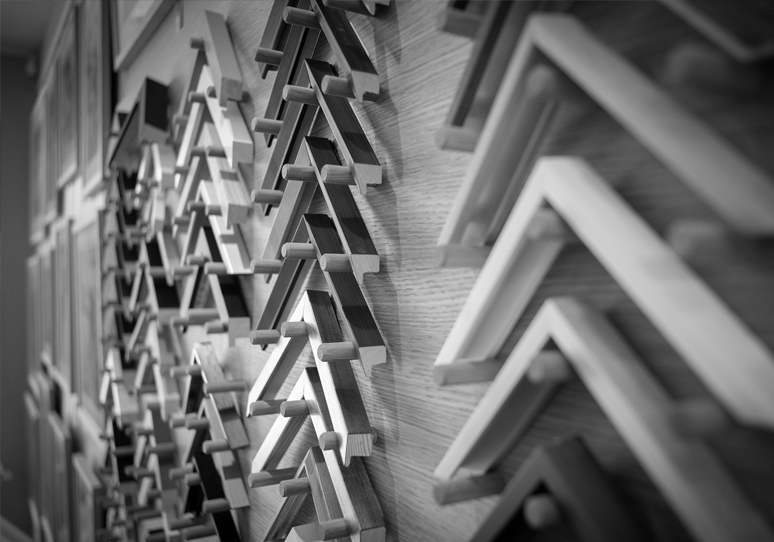
We bespoke frame all prints; this ensures that your print will be presented at its best. Each frame is hand-assembled with joints precisely aligned. The mount is an archival pH neutral museum grade white core mount which does not fade with time. We use 2mm UV filtering glazing and there is a choice of wood and aluminium frames.

