



Piper, John – The Royal Pavilion
Price range: £110.00 through £192.00
Description
‘Brighton Aquatints’ is Piper’s only fully realized example of an ‘artist’s book’. It was published in 1939 by Gerald Duckworth, and through its aquatints it celebrates some of Brighton’s most iconic architecture: its Regency squares with their stuccoed and balconied houses; the Royal Pavilion in all its extravagance, and the filigree beauty of the West Pier. Each aquatint was hand coloured, mostly by Piper himself, but some with the help of his friend the poet John Betjeman, who first suggested the idea for the book.
The filigree finery of this pleasure palace, built for George IV, is showcased to good effect in this print, highlighted, as it is, by dark skies and equally dark foreground. The building has become synonymous with Brighton – an architectural icon of the city itself.
About This Artist
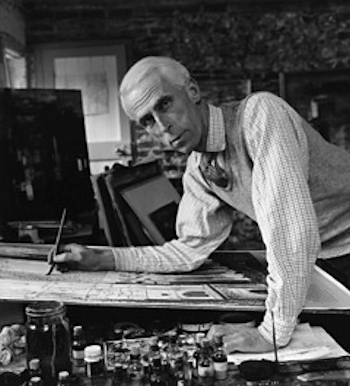
John Piper
Now considered one of the most significant British artists of the Twentieth Century, John Piper was born in Epson, 1903. Not persuaded by his solicitor father to pursue a career in law, Piper enrolled at Richmond School of Art, and subsequently at the Royal College of Art, London.
In the early 1930’s Piper exhibited with the London Group before being invited by Ben Nicholson to join the Seven and Five Society whose members were Henry Moore, Ivon Hitchens, and Barbara Hepworth. Soon after Piper met the writer Myfanwy Evans, and the couple moved to Fawley Bottom, an abandoned farmhouse in the Chilterns, where Piper would reside his entire life.
But in the early thirties Piper also spent time in Paris, to visit Alexander Calder, Brancusi and Jean Hélion – avant-garde artists with an interest in abstraction, and by whom Piper was initially influenced. Soon after, however, Piper returned to his characteristic naturalistic style, and to his primary subject matter – the painting of derelict monuments and churches, subjects he first explored as a boy.
Myfanwy introduced Piper to John Betjeman, and Betjeman, then working on the Shell Guides, asked Piper to illustrate the Guide to Oxfordshire. Piper concentrated on churches for the Guide, but this collaboration was amongst many: Piper designed sets for the poet and composer Stephen Spender, and later for the composer Benjamin Britten and his productions at Glyndbourne. He also collaborated on pottery designs with Geoffrey Eastop who, for several years, had a studio alongside Piper’s at Fawley Bottom.
During the Second World War Piper was persuaded by Kenneth Clark to work as an Official War Artist, and again, Piper concentrated on the depiction of ruined buildings and churches. He would arrive soon after the destruction had been wrought, to sketch and record, and paint in oils later – thus his depiction ‘Interior of Coventry Cathedral’, for instance, which resulted from sketches made on the morning after the air raid of 14th November, 1940. But Piper also worked on the Recording Britain project set up by Kenneth Clark to record historic buildings or buildings of importance thought to be at risk of being bombed.
From the 1950’s Piper worked in collaboration with Patrick Reyntiens on commissions for stained glass windows. One such commission came from the architect Basil Spence for the Baptistry window in what became the new Coventry Cathedral. Piper also created tapestries, again often for Cathedrals (Chichester, Hereford and Llandaff Cathedrals, for instance) and he also produced designs for furnishing fabrics which were manufactured by Sanderson and Sons Ltd, and David Whitehead Ltd. This latter was part of a movement to bring art and design to the masses (see also biography of Lucienne Day Artist).
Piper wrote extensively on art, and together with his wife Myfanwy he founded the art journal ‘Axis: A Quarterly Review of Contemporary Abstract Painting and Sculpture’. This ran from 1935-7.
Piper died at his home, Fawley Bottom, 28th June, 1992.
Related products
-

Andrews, Sybil – Winch
Price range: £138.00 through £250.00 -

Bawden, Edward – Cattle Market Braintree
Price range: £148.00 through £260.00 -

Bawden, Edward – Liverpool Street Station
Price range: £135.00 through £247.00 -

Flight, Claude – Speed
Price range: £138.00 through £250.00 -

Ardizzone, Edward – Tim and Lucy
Price range: £49.00 through £131.00 -

Bawden, Edward – The Pagoda at Kew
Price range: £148.00 through £260.00 -
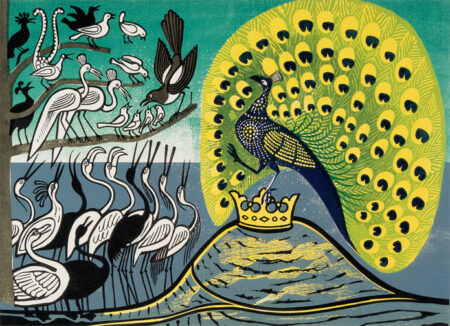
Bawden, Edward – Peacock and Magpie
Price range: £148.00 through £260.00 -

Andrews, Sybil – Racing
Price range: £138.00 through £250.00 -

Ardizzone, Edward – Little Tim and the Brave Sea Captain
Price range: £56.00 through £138.00 -

Ardizzone, Edward – Flotsam and Jetsam (orig. untitled)
Price range: £78.00 through £160.00
FRAMING
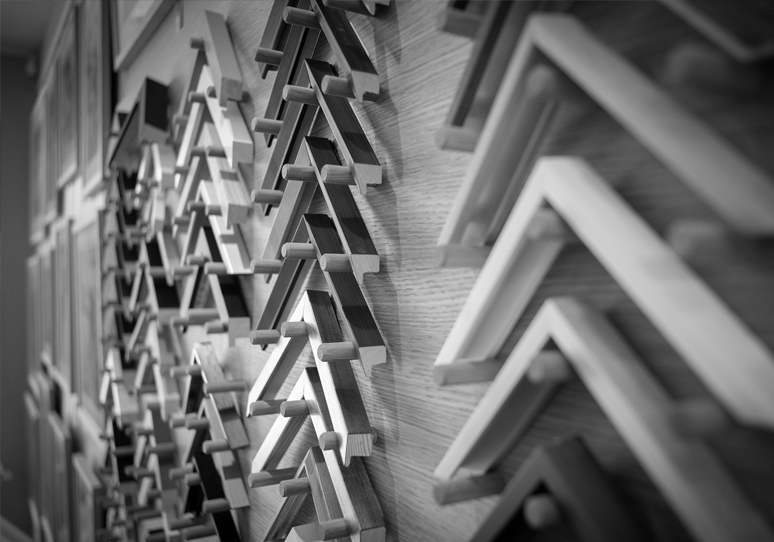
We bespoke frame all prints; this ensures that your print will be presented at its best. Each frame is hand-assembled with joints precisely aligned. The mount is an archival pH neutral museum grade white core mount which does not fade with time. We use 2mm UV filtering glazing and there is a choice of wood and aluminium frames.

