



Pellew, Claughton – The Train
Price range: £225.00 through £363.00
Description
Ink, gouache, watercolour and pastel (1920). This is Claughton Pellew at his best. There is all the accuracy of depiction that a master wood engraver, such as he was, can bring to his subject, but there is more than accuracy. Pellew manages to infuse his painting with the kind of romantic intensity which is matched only by someone like Ravilious in his work. In subject matter the two artists can also be compared: there’s a narrative about agricultural work – the shepherd and his flock, but there’s also the train (compare with Ravilious’s Westbury Horse (1939), for instance).

About This Artist
Claughton Pellew
In the autobiographical Outline, Paul Nash, a friend and contemporary at The Slade, writes of Claughton Pellew’s ‘devotional approach’ to the natural world. Nash also acknowledges Pellew’s influence in teaching him to look – to attend properly to that which surrounded him. This looking and attending, minutely and yet not with accuracy only, but with the kind of passionate intensity which accompanies a deep feeling for, even love of, the natural world, is clearly apparent in Claughton Pellew’s work.
Born in Redruth, Cornwall, on April 11th 1890, Pellew’s father, William Pellew-Harvey, was a mining engineer and his mother, Elizabeth (née Hichens) was an artist. Soon after his birth the family moved to Canada. There they travelled on the Canadian Pacific Railway – on journeys, Pellew would recall, through landscapes of mountains, lakes and huge forests, before they returned to London where William Pellew-Harvey would set up a mining consultancy.
After attending Merchant Taylor’s School (1902-1906) Pellew started at the Slade (1907-1911) where his tutors were Henry Tonks and Wilson Steer, and his contemporaries included Ben Nicholson, Paul Nash and Stanley Spencer. Just after his training Pellew visited Italy. Here the art of the Florentine Quattrocento would impress him deeply – not only as art, but for its religious symbolism too. Prior to the journey to Italy he had felt himself drawn to Roman Catholicism, and his visit there, particularly the time he spent in Assisi (1913), undoubtedly influenced his decision to convert to Roman Catholicism.
His Catholicism, would, in turn, influence his position on the 1914-18 war. Pellew was received into the church in early 1914, just before the outbreak of the War, and during the latter part of the war (conscription was introduced only in 1916) he was confined as a conscientious objector in Home Office Works centers’ at Dyce near Aberdeen, then at the Wakefield Centre and finally at Dartmoor.
Objectors to the war were handled with more or less severity – some were permitted full exemption from service in any form, most were expected to serve non-directly, and others were incarcerated for the full duration. Pellew suffered inordinately from his confinement. And the sense of ostracism and sheer physical hardship was made all the more difficult to bear when upon his release he found that other artists – the better-connected Bloomsbury artists Duncan Grant and Mark Gertler, for instance – had avoided imprisonment. John Nash, who by this time had got to know Pellew through his brother Paul, suggested that these war experiences had left his friend with a ‘sense of permanent isolation from which [he] never recovered’.
Pellew married Emma Marie (‘Kechie’) Tennent (1919) who had also studied at the Slade and who, during the War, had likewise become a Roman Catholic. Together they moved to a remote village in rural north Norfolk where after several years, with the help of a local builder, they designed and built their own house, The Pightle. Here they lived a simple life: they used paraffin lamps; they rode bicycles instead of driving a car, and they gardened. They rarely left Norfolk, but on several occasions (1923/1929-3) they travelled to Bavaria, staying at Tutzing on the Starnbergerzee where the lakes and trees must have reminded Pellew of his early years in Canada, and the landscapes were spur to the creation of drawings and watercolours by both.
Pellew continued to paint, and towards the end of the decade he also experimented with etching. But it is perhaps as a wood engraver that Pellew is primarily known. He began wood engraving in 1923, and in that year exhibited three engravings at the annual Society of Wood Engravers’ exhibition. By the middle of the decade Pellew was working on larger scale engravings – From My Window (1925) for instance – which have a surety of line, and wherein he also achieves a rich variation of textures.
Pellew did not exhibit very much – only a handful of exhibitions in his life-time can be counted: at the New English Art Club (1925), and with the Society of Wood Engravers (1923; 1930; ’32). He was too retiring on the whole, and self-effacing, and moreover he lived in such a remote area that mixing with his contemporaries, and thereby finding a recognizable place amongst them, was never achieved in his life-time. In content, however, there are similarities to the kind of themes of rural peace and harmony, and in antithesis, of a dislike of the modern, which were explored by the inter-war neo-romantics – by Eric Ravilious, John Piper, Graham Sutherland and Robin Tanner. Pellew wanted – and in many senses found in the ways in which he lived – a return to the clearer certainties of pre-war Britain, a world before the machine had become omnipresent and the city’s invasive sprawl had covered so much of the countryside. The recurring images in his work are of rural scenes – of hayricks, trees, animals and the elements.
Pellew died in 1966, a relatively unknown artist. After his death, and more latterly, there has been far more interest in the work of this shy yet intense watercolourist and wood engraver. Exhibitions of his work were held at Norwich in 1967, at the Ashmolean in Oxford in 1987 (primarily wood-engravings), and a s
Related products
-

Bawden, Edward – Liverpool Street Station
Price range: £135.00 through £247.00 -

Flight, Claude – Speed
Price range: £138.00 through £250.00 -

Bawden, Edward – Autumn
Price range: £148.00 through £260.00 -

Bawden, Edward – Covent Garden Flower Market
Price range: £148.00 through £260.00 -

Ardizzone, Edward – Garden at the Red Lion
Price range: £29.00 through £121.00 -

Bawden, Edward – Brighton Pier
Price range: £135.00 through £247.00 -

Andrews, Sybil – Winch
Price range: £138.00 through £250.00 -

Andrews, Sybil – Water Jump
Price range: £138.00 through £250.00 -

Andrews, Sybil – Windmill
Price range: £138.00 through £250.00 -

Ardizzone, Edward – Tim and Lucy
Price range: £49.00 through £131.00
FRAMING
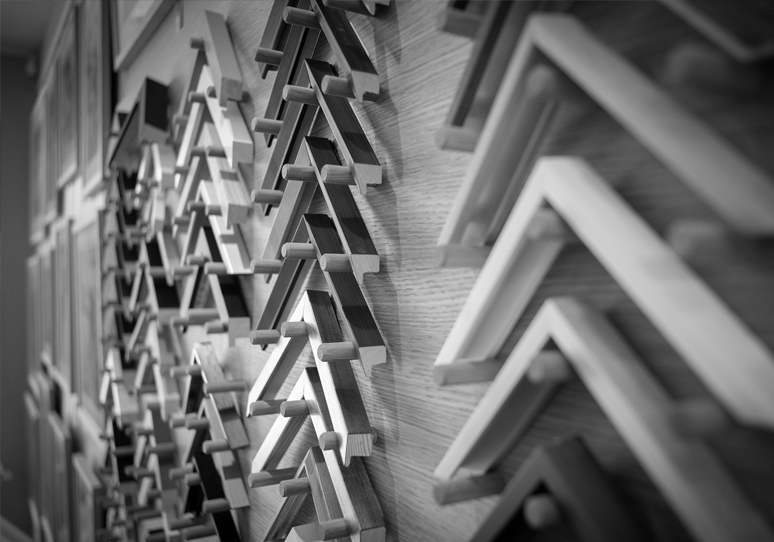
We bespoke frame all prints; this ensures that your print will be presented at its best. Each frame is hand-assembled with joints precisely aligned. The mount is an archival pH neutral museum grade white core mount which does not fade with time. We use 2mm UV filtering glazing and there is a choice of wood and aluminium frames.

