


Lanyon, Peter – Underground
Price range: £115.00 through £227.00
Description
This print (and its companion, In the Trees) was created in a studio above the Leach Pottery in St. Ives, Cornwall. Warren Mackenzie at the time was a visiting American student potter and worked on the print with Lanyon. It has all the characteristics of one of Mackenzie’s much collected pots: there is an appealing earthiness to the colours, and the central black lines remind one of kanji – Japanese script – and echo, perhaps, the influence that Japan had on Mackenzie’s teacher, Bernard Leach.
About This Artist
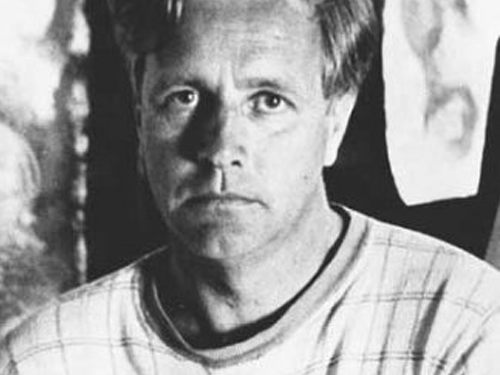
Peter Lanyon
Peter Lanyon is identified most consistently as a landscape painter, yet he produced prints, made pots, murals and stained glass works, he created sculptures and constructions, and he taught. And in fact the term ‘landscape painter’ hardly does justice: as commonly understood, ‘landscape’ suggests natural forms, and works created by such an artist are often expected to canvas an arrangement of such forms into easily comprehended compositions. ‘Landscape’, for Lanyon, meant more than natural forms: his paintings explore both the natural and the man made, the historical and the contemporary. And Lanyon’s paintings are not conventionally composed, nor easily comprehended. Whilst their colours often make a direct reference to the land, their shapes are made semi-abstract or abstract, perspective might be head-on or from above, and content is not always easily discerned.
Lanyon was born in St. Ives, Cornwall. After school he took painting lessons from Borlase Smart, a well respected art teacher and academic painter. He attended Penzance School of Art before moving to the Euston Road School of Art, London, where he was taught by Victor Pasmore. On his return to St. Ives he met Ben Nicholson, Barbara Hepworth and Naum Gabo – all three of whom had departed London to escape the war, and it was around these artists that the St. Ives School, with Lanyon amongst them, would cohere.
Lanyon’s first one-man exhibition was at the Gimpel Fils in London, 1949. Regular exhibitions there would follow in the fifties, and Lanyon also participated in group shows with the Arts Council and the British Council. He sold little, however, and turned to teaching, first at the Bath Academy of Art, Wiltshire (1951-6) and from 1954 to 1960, with the help of Terry Frost and the painter William Redgrave, he set up a small art school: ‘St. Peter’s Loft’.
In the late fifties (1957) Lanyon visited New York for an exhibition of his works at the Catherine Viviano Gallery. Subsequent exhibitions through the next decade would take place here, but in New York Lanyon also met and befriended Mark Rothko and Robert Motherwell, both of whom would make visits to St. Ives. His work in England was at this juncture meeting with critical success: he won the Critics’ Prize in 1954; second prize in the John Moores exhibition (1959) and the Marzzotto acquisition award (1962), but actual sales were slow. All the more welcome, therefore, his relative success in the US, and sales there allowed Lanyon to pursue an interest in flying.
Lanyon obtained his pilot licence and took up glider flying, and the paintings which resulted – his ‘gliding’ pictures – allude to the experience of looking down upon a patchwork of land below. He gained a more complete understanding of landscape, but his source of inspiration also become one of destruction as Lanyon sustained critical injuries as a result of a flying accident, and at the age of only 46, on August 31st, 1964, he died.
Lanyon’s work started to be recognized more widely in Britain in the 1980’s. He is now hailed as an innovator, particularly for his interdisciplinary approach to landscape painting. Lanyon’s work is esteemed by private collectors, but his work can also be found in public collections: at the Tate; the Scottish National Gallery of Modern Art; the city of Birmingham Museum and Art Gallery, and the Whitworth Art Gallery, Manchester.
Related products
-
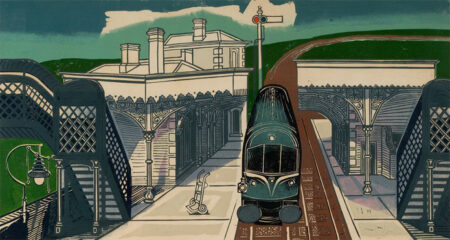
Bawden, Edward – Braintree Station
Price range: £135.00 through £247.00 -

Andrews, Sybil – Windmill
Price range: £138.00 through £250.00 -

Ardizzone, Edward – Little Tim and the Brave Sea Captain
Price range: £56.00 through £138.00 -

Andrews, Sybil – Racing
Price range: £138.00 through £250.00 -

Andrews, Sybil – Football
Price range: £138.00 through £250.00 -

Bawden, Edward – Borough Market
Price range: £148.00 through £260.00 -

Ardizzone, Edward – Tim’s Friend Towser
Price range: £49.00 through £131.00 -

Ardizzone, Edward – Domino Players
Price range: £29.00 through £121.00 -

Ardizzone, Edward – The Great Sail
Price range: £78.00 through £160.00 -

Flight, Claude – Speed
Price range: £138.00 through £250.00
FRAMING
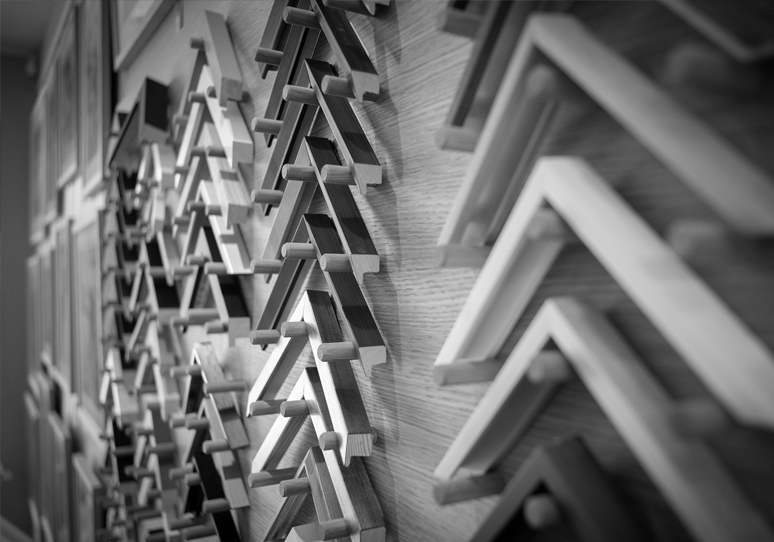
We bespoke frame all prints; this ensures that your print will be presented at its best. Each frame is hand-assembled with joints precisely aligned. The mount is an archival pH neutral museum grade white core mount which does not fade with time. We use 2mm UV filtering glazing and there is a choice of wood and aluminium frames.

